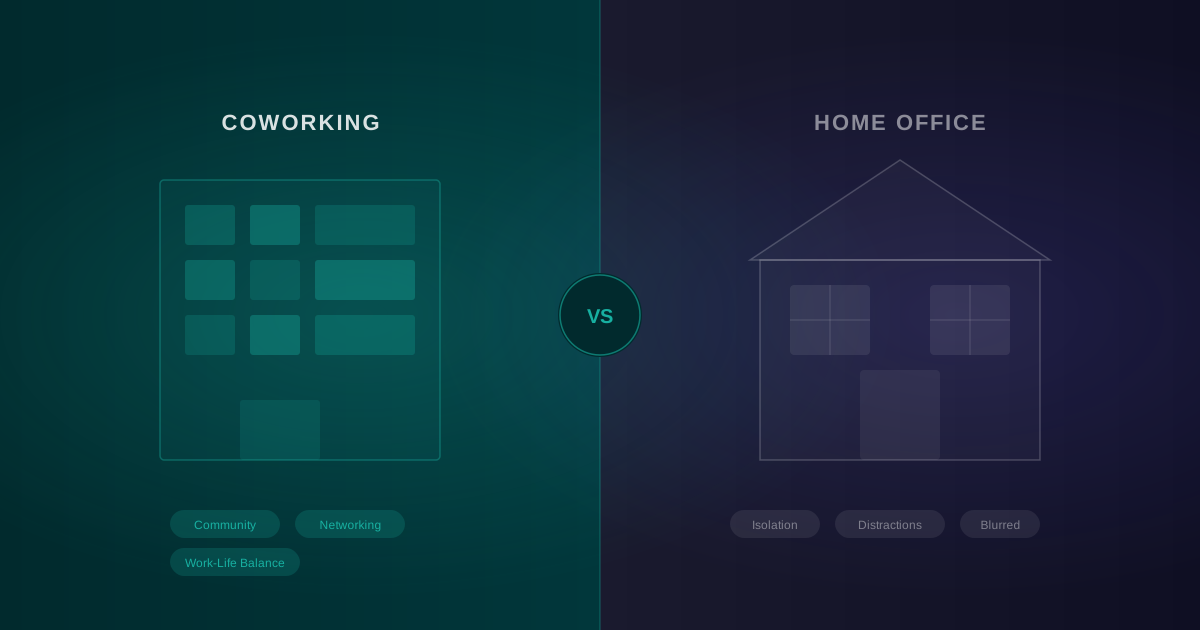
Working from home became normal during the pandemic. Coworking spaces had been growing before that, and they've grown faster since. The right choice depends on your work style, life situation, and goals — but there are patterns worth knowing.
1. Focus and Productivity
Home: Distractions are structural. Family, chores, easy access to the couch — the environment works against sustained focus. The problem isn't willpower, it's context.
Coworking: A dedicated workspace creates a mental cue for work. Being surrounded by other people working has a real effect on motivation and output. You don't need a study to confirm this — you've likely felt it.
2. Mental Health and Social Connection
Home: Isolation creeps in. A day of Zoom calls isn't the same as human presence. Many people who initially loved remote work found this out after six months.
Coworking: Daily ambient social contact — brief conversations, shared coffee breaks, a familiar face — matters more than it seems. It won't fix serious problems, but it prevents the small ones from accumulating.
3. Work-Life Separation
Home: The boundaries dissolve. Work expands into evenings and weekends. This isn't a discipline problem — it's a spatial one. When home is the office, neither ever fully turns off.
Coworking: Commuting to a workspace and leaving it creates natural on/off transitions. When you leave — the day is done.
4. Costs
Home: Appears free but isn't. Electricity, heating and cooling, a proper desk setup, coffee, faster internet — these add up. The hidden cost is what distracted time and isolation do to your output.
Coworking: One monthly cost that covers workspace, utilities, coffee, and usually printing and meeting rooms. Predictable, and for most people, lower than the full home-office total when counted honestly.
5. Networking and Opportunities
Home: Your network grows through deliberate effort only — calls, LinkedIn, events you specifically attend. Zero serendipity.
Coworking: Proximity creates opportunities. Conversations happen. Referrals, collaborations, and clients often come from people you share a building with, not just people you've reached out to online.
What's the Right Answer?
For most independent workers and small teams, a hybrid approach works well — coworking for focus and connection, home for deep, uninterrupted tasks. Day passes at most coworking spaces make this practical without committing to a full membership from day one.